You buy a slightly out-of-the-money NVDA call with a delta of 0.35. The stock rallies three dollars and suddenly that same contract is moving almost half a dollar for every dollar the stock gains. Nothing changed about the position. What changed is delta, and the number that governs how fast delta changes is option gamma.
Gamma is the second derivative of the option's price with respect to the underlying, which is a fancy way of saying it measures acceleration. Delta tells you your current directional exposure; gamma tells you how quickly that exposure will shift against you or in your favor. Of all the options Greeks, gamma is the one traders underestimate most, because it stays quiet for weeks and then dominates the final few sessions before expiration.
What option gamma measures
Delta is the expected change in an option's price for a $1 move in the underlying. A 0.40-delta call should gain roughly $0.40 (or $40 per contract) if the stock rises a dollar. Gamma is the expected change in that delta for the same $1 move.
Say an AMD $165 call shows a delta of 0.42 and a gamma of 0.06:
- AMD rises $1 to $166. The call's delta becomes roughly 0.48.
- AMD rises another dollar to $167. Delta is now around 0.54.
- AMD falls $2 instead, to $163. Delta drops toward 0.30.
Two things follow from that. First, a long call gets longer as the stock rises and shorter as it falls, which is why long options feel like they accelerate into a trend. Second, delta is only accurate for small moves. Over a large move, the P&L on a long option beats what delta alone predicts, and that extra is gamma.
Gamma is always positive for long options, calls and puts alike, and always negative for short options. A long put has negative delta and positive gamma: as the stock falls, delta runs from -0.40 toward -0.70, so the position gets shorter exactly when being short is working.
How gamma fits with the other Greeks
Gamma doesn't stand alone. It's paired with theta, and the relationship is close to a law: the positions with the most gamma also pay the most time decay. You cannot own sharp acceleration for free. Vega sits alongside both, since the same short-dated at-the-money contracts that carry peak gamma also carry the smallest vega. If you're still mapping how delta, theta, vega and rho interact, gamma is the bridge between the directional ones and the time-based ones.
Where gamma is highest
Gamma peaks at the money and falls away in both directions. Deep in-the-money contracts have deltas pinned near 1.00 and nowhere left to go; far out-of-the-money contracts have deltas near zero and need an enormous move before that changes. The action is in the middle, roughly where delta sits between 0.40 and 0.60.
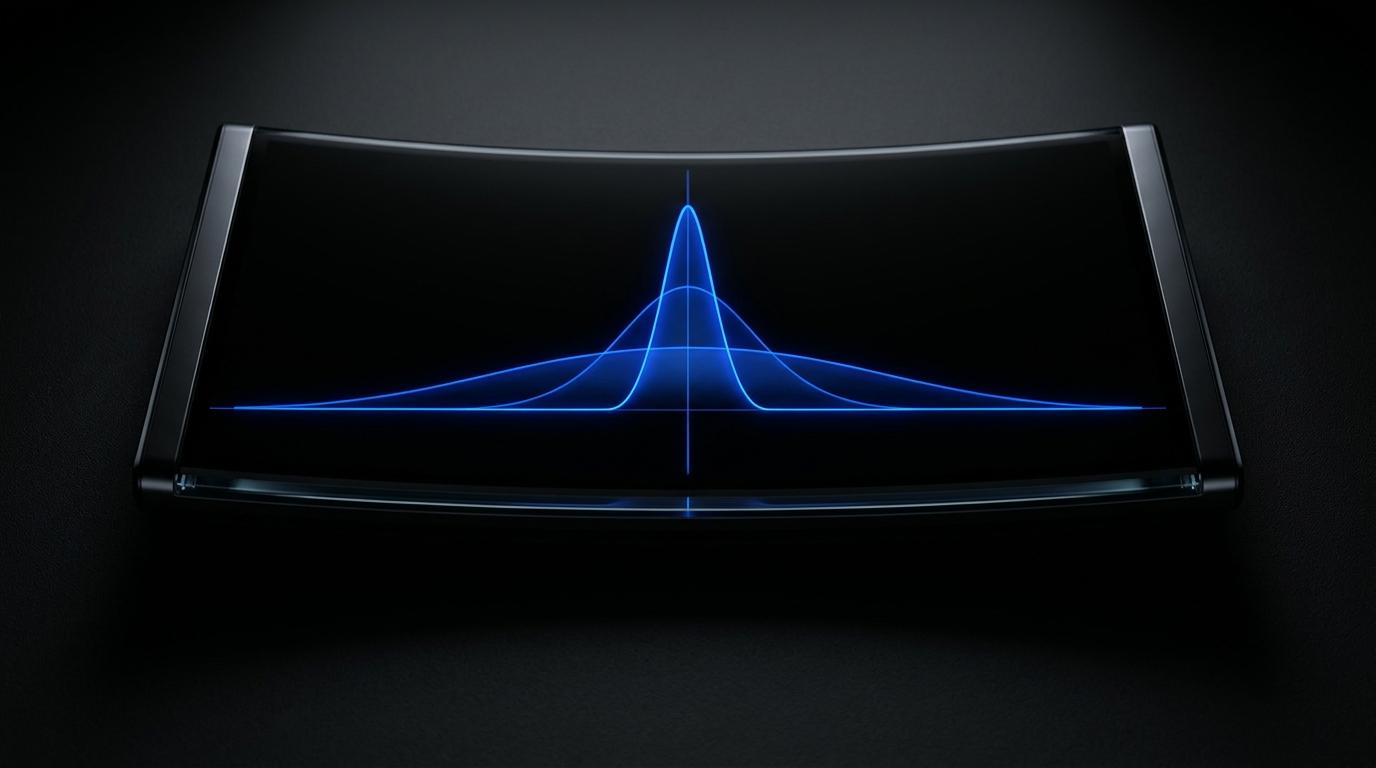
Time compresses that curve. With 60 days left, a stock has room to wander, so delta drifts rather than jumps and the gamma profile is a broad, gentle hump. With two days left, the same strike is a coin flip that has to resolve, and delta can swing from 0.20 to 0.80 on a single move. The Options Industry Council's explanation of gamma and moneyness makes the same point: gamma reaches its most extreme levels with the stock sitting right at a strike into expiration, because delta is about to travel all the way to 1.00 or all the way to zero.
The opposite end of the curve is instructive too. A two-year contract on a crypto-linked name like COIN behaves almost like stock or like nothing at all, depending on the strike, and barely reprices its delta day to day. That low, stable gamma is part of why LEAPS options are used as stock substitutes: you want delta exposure without the whiplash.
The expiration-week gamma problem
Gamma risk is a calendar problem before it's a strategy problem. The same contract you were comfortable holding with three weeks left is a different instrument with three hours left.
Consider a QQQ call struck a dollar above spot on the morning of expiration. It might show a 0.35 delta. If the index drifts up through the strike by lunchtime, delta is 0.65 and the position is nearly twice as directional as it was at the open, with no action taken. If it drifts back down, the contract bleeds to almost nothing in minutes. That's the profile zero-days-to-expiration contracts are famous for, and it cuts both ways: outsized gains on a clean move, total losses on a reversal.
Practical consequences worth planning around:
- Position sizing stops being static. Your effective share-equivalent exposure changes through the day even if you never touch the order ticket.
- Stops behave differently. A mental stop based on the option's price can be blown through in one print when gamma is high and the underlying gaps.
- Profit targets arrive and leave fast. A winner can round-trip to zero inside a single candle on the underlying.
Monthly and quarterly expirations concentrate all of this. Hedges roll, index and ETF contracts settle together, and the amount of gamma coming off the board in one session is enormous. Traders working through an OPEX or triple witching week often find that underlyings behave as if they're magnetized to round strikes until the contracts expire, then move freely afterward. That pinning effect is gamma at the dealer level, not coincidence.
Long gamma versus short gamma
Every options position sits on one side of this line, and the distinction explains most of the difference in how strategies feel to trade.
Long gamma | Short gamma | |
|---|---|---|
Typical positions | Long calls, long puts, straddles, strangles | Short calls and puts, credit spreads, iron condors |
Theta | Paying it | Collecting it |
Best market | Fast, trending, volatile | Quiet, range-bound |
Risk profile | Many small losses, occasional large wins | Many small wins, occasional large losses |
Worst case | Slow chop that decays the position | A gap that keeps going |
Short gamma is where accounts die. Selling a credit spread against a sleepy index is comfortable right up until the market makes a three-sigma move, at which point delta grows against you with each additional point: the more wrong you get, the faster you get wrong. Note that selling options to open isn't permitted on every evaluation; on Vanquish, that sits with the Advanced Options plan, while the other plans are long-premium only, which keeps gamma on the trader's side by construction.
What a gamma squeeze actually is
A gamma squeeze is the dealer-hedging version of the same mechanics. When traders buy large quantities of short-dated calls on a single name, the market makers on the other side are short those calls, which means they're short gamma. To stay delta-neutral they buy shares.
If the stock rises, their short calls gain delta, so they must buy more shares to re-hedge. That buying pushes the stock higher, which adds more delta, which forces more buying. The loop feeds itself until the calls stop gaining delta or the flow dries up, and it unwinds just as violently when dealers sell the hedge back. Traders who track where this positioning sits across strikes are reading gamma exposure, which aggregates dealer gamma into a single map of where hedging flows flip from stabilizing to destabilizing.
Two things to keep straight. A squeeze requires concentrated short-dated open interest relative to the stock's float and liquidity, so it's far more common in single names than in SPX. And it is not a trade setup on its own: by the time a squeeze is named in public, the gamma that caused it is usually days from expiring.
Managing gamma in practice
You don't neutralize gamma as a retail trader. You choose how much of it you want.
- Buy time to reduce it. A 30-delta call 45 days out gives similar directional exposure to a weekly with far less day-to-day whiplash, and lower theta per day.
- Take profits earlier on short-dated contracts. High gamma means the distribution of outcomes from here is wide. Locking in a 60% gain on an expiration-day contract is a reasonable response to that, not a lack of conviction.
- Cut size as expiration approaches. Same strike, same thesis, fewer contracts. You're holding more effective exposure per contract than you were last week.
- Close short-gamma positions before the final session. The money collected in the last day of a credit spread is small relative to the gamma risk taken to hold it.
- Watch the strikes, not just the chart. When price is hovering at a heavily traded strike into the close, expect hesitation around that level rather than a clean trend.
Is high gamma good or bad?
Neither on its own. High gamma is good when you're long options and the underlying moves decisively, because your position grows into the move. It's bad when you're long options and nothing happens, since you're paying heavy theta for acceleration you never use, and it's dangerous when you're short options, because losses compound.
What is a good gamma number for an option?
There's no universal target. Gamma scales with the price of the underlying and the time to expiration, so a 0.02 gamma on a high-priced stock and a 0.15 gamma on a $30 name can represent identical risk. Compare gamma across strikes and expirations within the same underlying, not across different tickers.
Do puts have gamma?
Yes, and for the same strike and expiration a call and a put have the same gamma. Delta differs in sign, gamma doesn't. A long put's negative delta becomes more negative as the stock falls, which is positive gamma working for the holder.
How is gamma calculated?
It comes out of an options pricing model as the rate of change of delta with respect to the underlying price. Pricing frameworks such as the Black-Scholes model produce it from spot price, strike, time to expiration, volatility and rates, and your broker's chain displays the output. Hand-calculating it has no practical purpose; understanding its shape does.
Is gamma the same as gamma exposure?
No. Gamma is a per-contract sensitivity. Gamma exposure is an aggregate estimate of how much hedging the dealer community has to do across all strikes in an underlying, usually expressed in dollars per point of movement.
Gamma rewards the trader who thinks in terms of exposure rather than contracts. Once you accept that a position's directional risk is a moving number, decisions about sizing, expiration and exit timing get simpler, and the choice between a weekly and a monthly stops feeling arbitrary. Everything else in the options toolkit, from spread construction to volatility trades, sits on top of that understanding.
If you'd rather practice reading option gamma in a live market without putting your own money at risk, Vanquish evaluation plans run on simulated accounts with live data and published rules, so you can see how acceleration feels on the P&L before it costs you anything.