NVDA has run hard for three weeks and you think the move is tired. The at-the-money put you want costs $9.00 a contract — $900 of risk for a pullback you expect to be moderate, not catastrophic. That gap between the view you have and the price of expressing it is exactly where the bear put spread earns its keep. You buy the put you wanted, sell a cheaper put below it, and the premium you collect knocks a chunk off the bill.
Also called a put debit spread or a long put spread, it's one of the four basic verticals and usually the first multi-leg trade someone learns after single-leg buying. It sits right next to the bull call spread on the map of options strategies, just pointed the other way. The cost comes down, the maximum loss comes down with it, and in exchange your profit stops growing below a strike you choose in advance.
How a bear put spread works
Two legs, same underlying, same expiration:
- Buy a put at a higher strike (the long leg, closer to the money)
- Sell a put at a lower strike (the short leg, further out of the money)
Puts gain value as the underlying falls, which is the core of the difference between calls and puts. Both legs move together, but the long put is worth more than the short put, so the position opens for a net debit. That debit is the entire amount at risk. No matter how violently the stock rallies against you, your long put sits above your short put and the two offset.
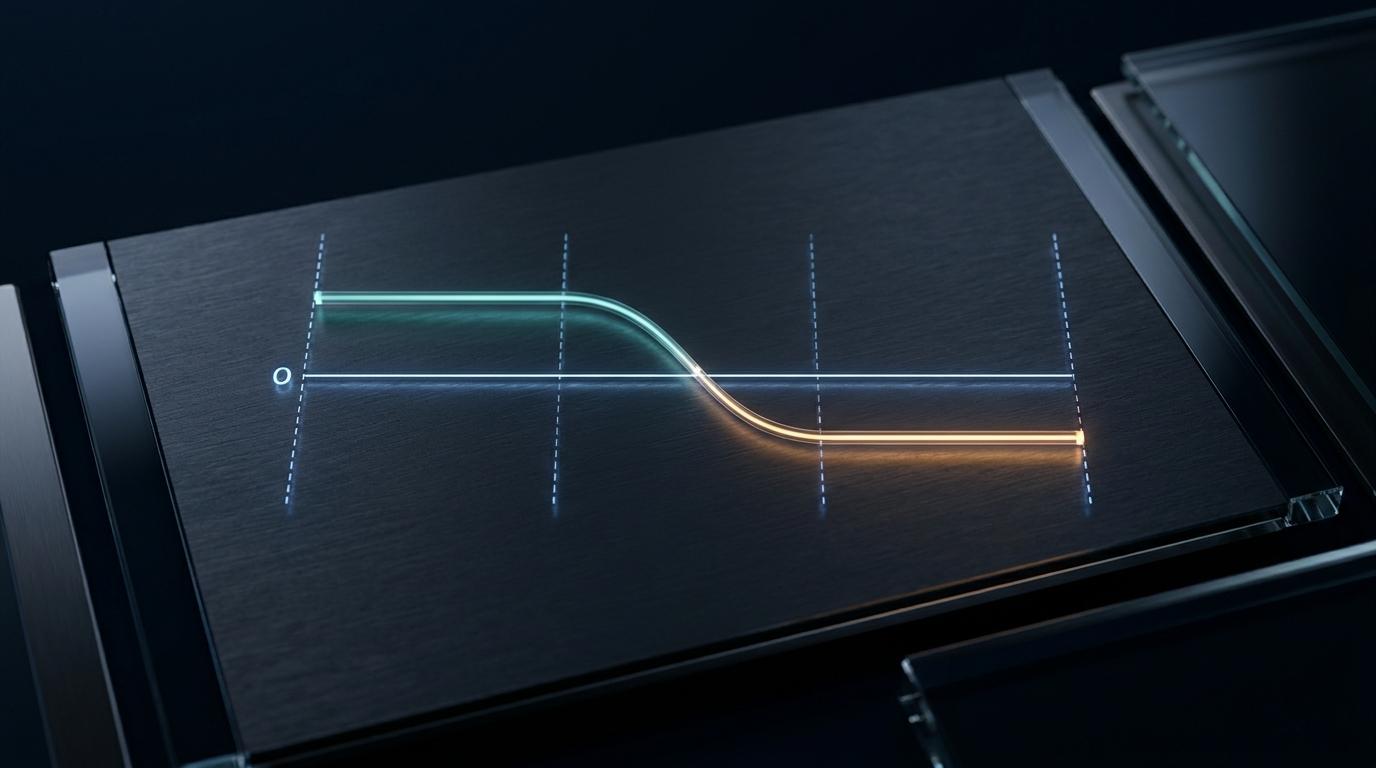
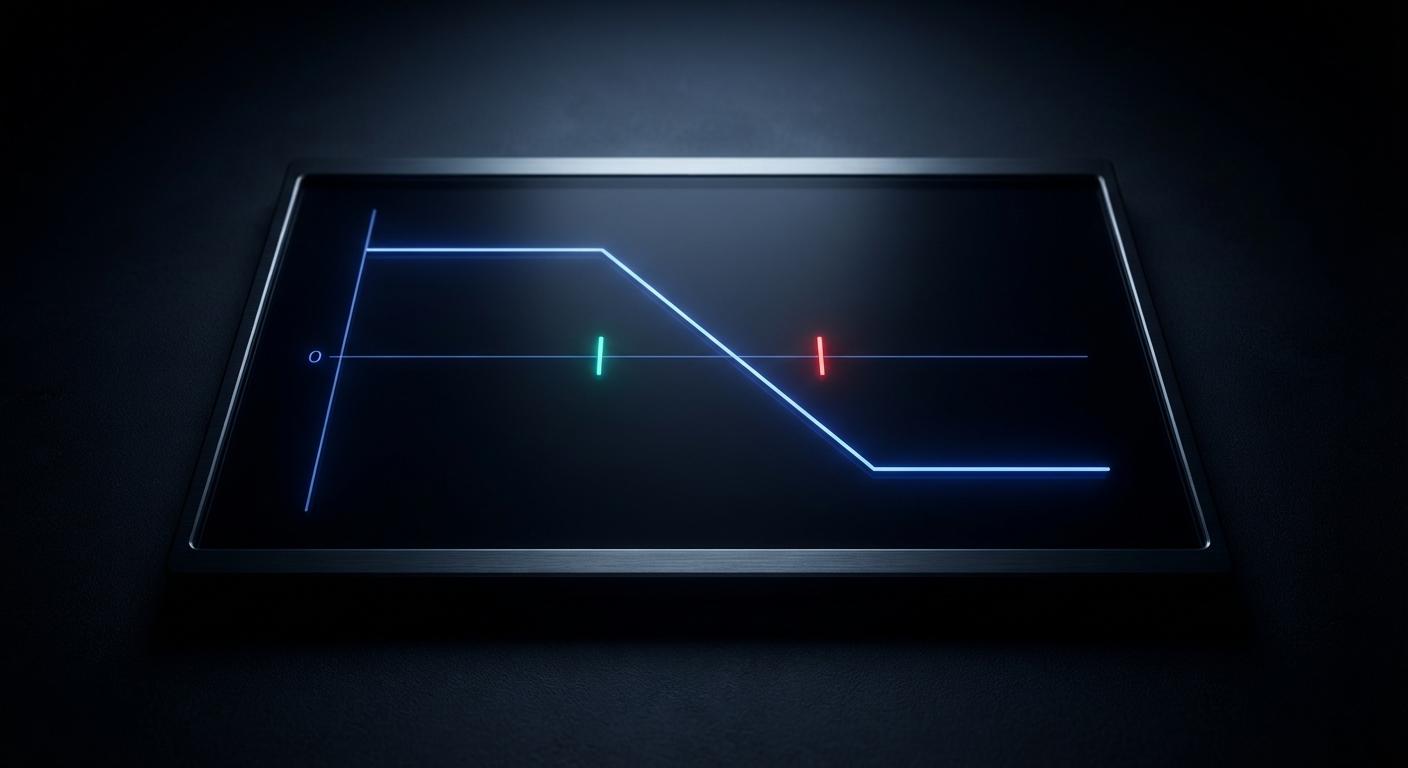
The position wants the underlying below the short strike by expiration. At that point both puts are in the money, the spread is worth the full distance between the strikes, and nothing more can be gained.
A worked example
Say NVDA is trading at $180 and you expect a drift back toward $170 over the next month.
- Buy the 180 put for $7.00
- Sell the 170 put for $3.00
- Net debit: $4.00, or $400 for one spread
NVDA at expiration | Spread value | Profit or loss |
|---|---|---|
$185 | $0.00 | −$400 |
$180 | $0.00 | −$400 |
$176 | $4.00 | $0 (breakeven) |
$174 | $6.00 | +$200 |
$170 | $10.00 | +$600 |
$165 | $10.00 | +$600 |
The three numbers worth memorizing:
- Maximum loss = net debit = $400
- Maximum profit = strike width − net debit = $10.00 − $4.00 = $600
- Breakeven = long strike − net debit = $180 − $4.00 = $176
Risking $400 to make $600 is a 1.5:1 payoff, and you need NVDA to fall about 2.2% just to break even. That trade-off is the honest cost of the discount. A straight long 180 put would have cost $700 and kept running below $170, but it also would have needed a bigger move to turn a profit.
Picking strikes
How wide to go
Strike width sets the shape of the trade. A narrow spread — say the 180/177.5 on NVDA — is cheap and can hit maximum value on a small move, but the reward is small in dollar terms and commissions eat a larger share. A wide spread behaves more like the long put: it costs more, the breakeven sits closer to the current price, and it keeps paying on a deeper decline.
A practical approach is to put the short strike where you actually think the move ends. If you're trading a pullback to a moving average on QQQ, sell the strike at that level. If you're fading a post-earnings pop in COIN and have no clear target, go wider and accept the higher debit rather than capping yourself at a level you picked arbitrarily.
How much time to buy
Time decay works against a bear put spread, just less brutally than it works against a single long put, because the short leg is decaying in your favor at the same time. The net effect still leans negative while the spread is out of the money.
Thirty to forty-five days is a reasonable default for a swing view. It gives the thesis room to play out without paying for months of premium you don't need. Shorter-dated spreads are cheaper and sharper, but they're a timing bet as much as a direction bet — on a weekly AMD spread, being right on Thursday instead of Tuesday can be the whole trade.
Delta as a shortcut
Reading strikes through delta speeds this up. A 40-delta long put paired with a 20-delta short put is a common, reasonably balanced structure: you're buying a leg with real sensitivity to the move and selling one far enough away that you're not giving up the first part of the decline. Pushing both legs further out of the money makes the spread cheaper and the payoff ratio prettier, at the cost of a much lower probability of getting there.
Debit or credit for a bearish view
You can express the same bearish opinion two ways. The bear put spread pays up front and profits as price falls. A call credit spread collects premium up front and profits if price simply fails to rise. Both are defined-risk verticals; they just monetize the view differently.
The deciding factor is usually implied volatility, plus how much movement you actually expect. Debit spreads prefer cheaper options and a real directional move; credit spreads prefer rich premium and are content with nothing happening. Running credit spreads versus debit spreads side by side is the fastest way to stop choosing between them on gut feel.
The size of the move you expect matters just as much as the premium. When the thesis is a drop to one specific price and no further, a butterfly spread pays better for that precision than a vertical does, because it sells both sides of the target instead of only the downside.
Managing the trade
A bear put spread rarely reaches full value early. Even when the underlying drops straight to your short strike, the spread might only be worth $7.50 of its $10.00 ceiling with two weeks left, because the short put still holds extrinsic value. That lag catches people out, and it's the main reason traders close spreads before expiration rather than grinding out the last dollar.
Three exits are worth having in mind before you enter:
- Profit target. Many traders take 50% to 75% of maximum profit and move on. On the NVDA example, closing the spread at $7.00 banks $300 of the possible $600 and frees the capital.
- Stop. Because risk is defined, some traders let the spread ride to zero. A tighter approach is to cut at half the debit — $200 on this trade — when the thesis is clearly wrong, for instance when the stock breaks back above the level you were fading.
- Time. If the move hasn't started with a week to go, the odds of the spread filling out shrink fast. Closing for whatever's left usually beats hoping.
Wide markets can make all three harder than they look on paper. Spreads are quoted as a package, and on thin names you may give up a meaningful slice of the debit just getting in and out, which is why liquid underlyings matter more for multi-leg trades than for single-leg ones. Working the order between the natural prices, rather than hitting the market, is worth the extra minute.
Risks that aren't on the payoff diagram
Early assignment. The short put can be assigned at any time if it goes deep in the money, which leaves you long shares — the same obligation you accept when you sell a cash-secured put, except here your long put keeps the downside capped. It's an inconvenience rather than a disaster, but it ties up capital and can create a stock position you didn't plan for.
Pin risk at expiration. If the underlying settles between your strikes on expiration day, the long put is in the money and the short put isn't, and you can end up with an unwanted position carried over the weekend. The Options Industry Council's walkthrough of bear put spread mechanics flags the same hazard, and the simplest answer is to close both legs before the bell rather than let them settle.
The cap is real. If NVDA gaps down 12% on guidance, the spread still pays $600 and not a cent more. That's the price you agreed to when you sold the lower strike. If you genuinely expect a violent move, a long put or a different structure fits the thesis better.
Trading spreads in a funded account
Multi-leg trades aren't available everywhere. At Vanquish, vertical spreads sit under the Advanced Options plan, which carries Level 4 permissions covering debit and credit verticals, condors, butterflies and straddles. The Basic Options and Rapid plans are built around buying calls and puts outright on any ticker, so a bearish view there is expressed with a long put rather than a spread. Our wider library of options education covers both sides of that choice.
Defined risk also does useful work against a trailing loss limit. A put debit spread's worst case is known the moment it's filled, which makes position sizing arithmetic rather than guesswork — and sizing is what keeps a drawdown limit from turning one bad session into a breach.
FAQs
Is a bear put spread the same as a put debit spread?
Yes. Bear put spread, put debit spread and long put spread all describe buying a higher-strike put and selling a lower-strike put in the same expiration. The names just emphasize different features: the direction, the cash flow at entry, and the fact that the long leg dominates.
What happens if both legs expire in the money?
The spread is worth the full difference between the strikes. In a cash-settled index product it settles automatically for that amount. On a stock, the two assignments offset into cash, but most traders close the position beforehand to avoid any weekend exposure.
Can I lose more than the debit I paid?
Not if both legs are held to expiration together. The long put sits above the short put, so the structure is self-covering. Losses larger than the debit only happen if you close or roll one leg and leave the other open — closing the long put while the short put remains is a different, far riskier trade.
Does rising volatility help a bear put spread?
Only marginally. Rising implied volatility lifts both legs, and because the long leg is closer to the money it usually gains a little more, so vega is slightly positive. The effect is much smaller than it would be on a single long put, since the short leg absorbs most of the change.
How wide should the strikes be?
Wide enough that the short strike reflects where you expect the move to stop. On a $180 stock, $5 to $10 wide is typical for a month-out spread. Narrower structures are cheaper but cap you quickly; wider ones behave more like an outright long put, with a cost to match.
Used in the right spot, a bear put spread turns an expensive directional idea into a measured one: a fixed debit, a fixed worst case, and a payoff you can calculate before you click. It won't catch the tail of a crash, and it needs the move to happen inside your expiration, but for the everyday bearish setup it's hard to beat on cost. Sit it alongside the other defined-risk vertical spread strategies and you have a toolkit for almost any directional view.
If you want to trade spreads on a funded account, the Advanced Options plan is where they live — the plan comparison lays out drawdowns, targets and account sizes side by side.